Best Sofa Materials for Families with Pets

If you share your home with a dog or cat, buying a sofa involves a different set of considerations to most people’s. The questions aren’t just “does it look good?” and “is it comfortable?” – they’re “will the cat scratch it to ribbons?”, “will dog hair embed in the fabric?”, and “can I actually clean that off?” This guide gives you honest, practical answers.
The Main Considerations for Pet Owners
Before looking at specific materials, it helps to understand the main challenges pets present to sofas – because different pets create different problems.
Cats and Scratching
Cats scratch furniture. This is simply what they do – it’s a behavioural need, not spite. The question is which sofa materials are most resistant to scratch damage, and which are most likely to show it.
Dogs and Hair
Dog hair – particularly from breeds with dense double coats – can work itself into fabric fibres and become genuinely difficult to remove. The texture of the fabric matters enormously here.
Mud, Damp, and Odour
Wet dogs on sofas is a particular challenge. Some materials absorb moisture and odour far more readily than others, and some can develop mildew or persistent smell if not cleaned promptly.
Claws and Snags
Both dogs and cats have claws that can catch on looped or textured fabrics, creating pulls and snags that are difficult or impossible to repair.
Material by Material – The Honest Assessment
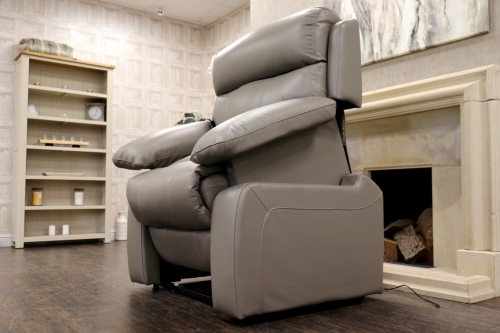
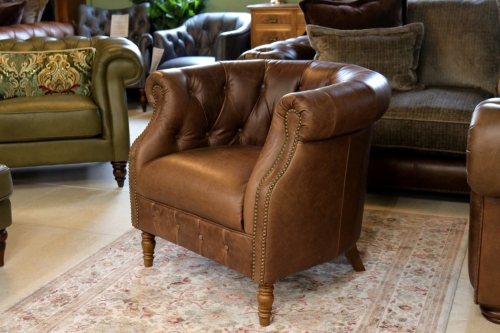
Leather – The Most Practical Overall
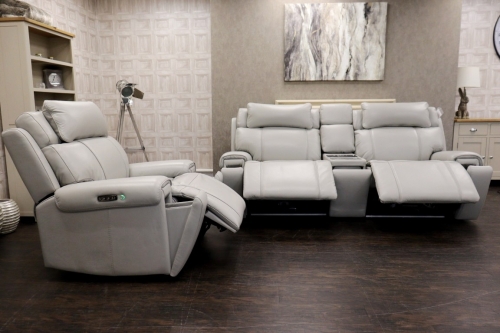
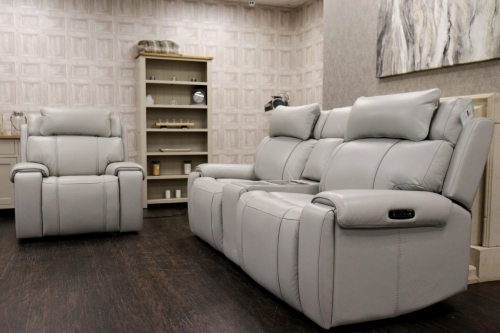
For most pet owners, leather is the most practical sofa material available. Here’s why:
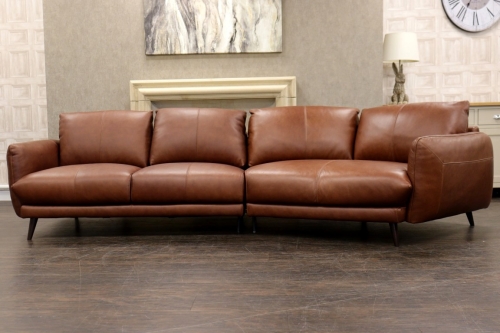
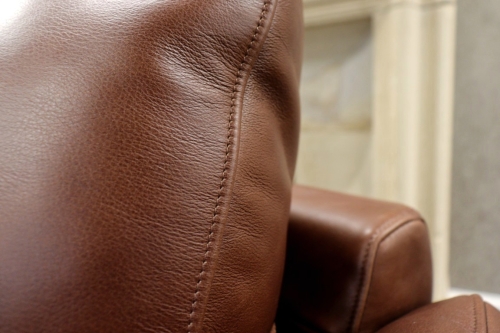
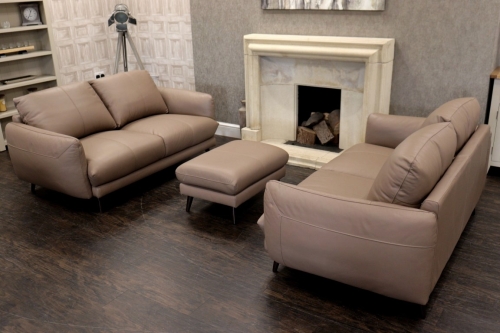
Pet hair sits on the surface rather than embedding in fibres – it wipes or vacuums off easily. Mud and wet marks wipe clean with a damp cloth. Odours don’t soak into leather the way they do into fabric. And while leather can be scratched by claws, the damage is typically less dramatic than on looped or textured fabrics.
The caveat is that repeated scratching from cats in particular will mark leather over time. Our leather protection plan adds a surface treatment that improves resistance, but no leather sofa is entirely claw-proof.
For colour, tan, brown, and grey leather all conceal minor scuffs and everyday marks better than white or cream.
Tightly Woven Fabric – Good with the Right Choice
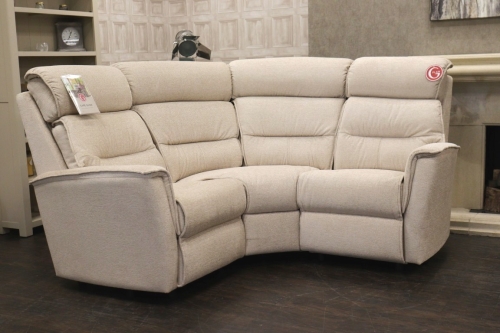
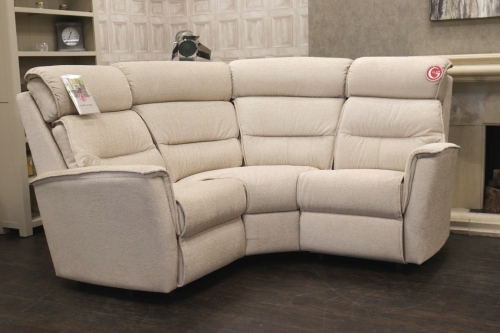
Not all fabric sofas are equal for pet owners. The key distinction is between tightly woven fabrics and loosely woven or textured fabrics:
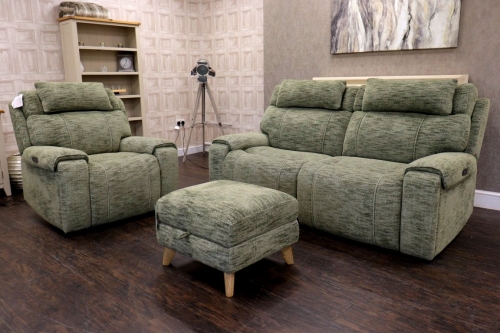
Tightly woven fabrics – think dense weaves, microfibre, or performance fabrics – resist pet hair embedding and are harder for claws to snag. They’re significantly more practical than loose weaves, chenille, or heavily textured fabrics. Many modern performance fabrics are also treated with stain-resistant finishes that make cleaning much easier.
Loosely woven fabrics, bouclé, and heavily textured weaves are the worst choices for homes with pets. Cat claws in particular will catch and pull at the loops, creating damage that worsens over time and cannot be repaired.
Cotton and Linen – Honest About Limitations
Our cotton and linen sofas are beautiful and create a wonderfully relaxed, organic feel – but they’re among the more challenging materials for pet owners. Natural fibres absorb moisture and odour readily, and cotton-linen blends can be more difficult to clean than performance synthetics. They’re manageable with regular maintenance and our fabric protection plan, but require more consistent effort than leather or performance fabric.
Velvet – Beautiful but Demanding
Velvet is a polarising material for pet owners. On the one hand, pet hair is highly visible on velvet and the pile can be difficult to clean thoroughly. On the other hand, velvet doesn’t snag as easily as some other pile fabrics, and the hair sits on the surface rather than embedding deeply.
Our velvet sofas are stunning, but in homes with heavy shedding dogs or scratch-happy cats, they require serious commitment to upkeep. A lint roller becomes a daily tool rather than an occasional one.
Colours to Consider for Pet Households
Beyond material, colour matters too. If you have a black Labrador, a white sofa is going to show every hair. If you have a golden retriever, a very dark sofa has the same problem.
The practical advice is to choose a sofa colour that’s similar to your pet’s coat colour, or to go with a mid-tone that shows less hair than extremes. Beige, mid-grey, and warm brown are the most forgiving across a wide range of pet coat colours.
The Protection Plan – Worth Every Penny for Pet Owners
If you have pets, our fabric and leather protection plan is not a nice-to-have – it’s genuinely worth the investment. The fabric treatment creates a barrier that prevents liquids from soaking in immediately, giving you time to blot and clean spills before they set. On leather, the surface treatment improves resistance to marks and makes cleaning significantly more effective. Both plans are applied at the point of purchase and last for the life of the sofa with our recommended maintenance.
Our Recommendation
For most households with both children and pets, our honest recommendation is protected leather in a mid-tone colour – tan, grey, or brown – with our leather protection plan. It handles daily life better than any other combination, it ages well, and it’s the easiest to maintain over the long term.
For households that strongly prefer fabric, a tightly woven performance fabric in a mid-tone with the fabric protection plan is the next best option.
Visit our showroom at 103 Canklow Road, Rotherham, S60 2JF or call 01709 377787. Our team regularly advise pet-owning families on the best choices for their specific situation.
Frequently Asked Questions – Sofas and Pets
What is the most scratch-resistant sofa material?
Protected leather is the most resistant to everyday claw marking among common sofa materials. Dense, tightly woven microfibre fabrics are the next most resistant. Avoid loosely woven fabrics, bouclé, and textured weaves if scratching is a concern.
Is leather or fabric better for dogs?
Leather is generally better – pet hair sits on the surface and wipes off easily, moisture wipes clean, and odours don’t soak in. The main risk is claw scratching, which is more of a concern with cats than most dogs.
How do I get pet hair off a fabric sofa?
A rubber glove dampened with water and wiped across the fabric creates static that lifts embedded hair effectively. A lint roller works for surface hair. For deeply embedded hair in textured fabrics, a stiff-bristled brush can help loosen it before vacuuming.
Can I train my pet not to go on the sofa?
Many owners successfully train dogs to stay off sofas. Cats are considerably more challenging to deter. If you’re not confident of enforcement, choose your sofa material on the assumption that the pet will use it – it’s a more reliable approach than hoping for the best.
What sofa colour is best for hiding pet hair?
Match the sofa colour approximately to your pet’s coat colour. If you have multiple pets of different colours, a mid-tone like warm grey or beige shows less hair than very light or very dark extremes.


Share This Article
Browse Our Sofas